 Recommended by 99% of travelers
.png)
.png)

.png)
.png)
.png)
.png)
The Lower Dolpo Trek is a premier off-the-beaten-path wilderness circuit that takes you deep into the isolated canyons of mid-western Nepal. Located entirely within the protected boundaries of Shey Phoksundo National Park, this strenuous-grade journey avoids the extreme technical demands of the far-northern Tibetan border while delivering raw Himalayan scale, ancient culture, and complete isolation from mass tourism. This forbidden landscape requires a specialized Restricted Area Permit (RAP) and a minimum of two travelers plus a licensed guide, making solo trekking strictly illegal.
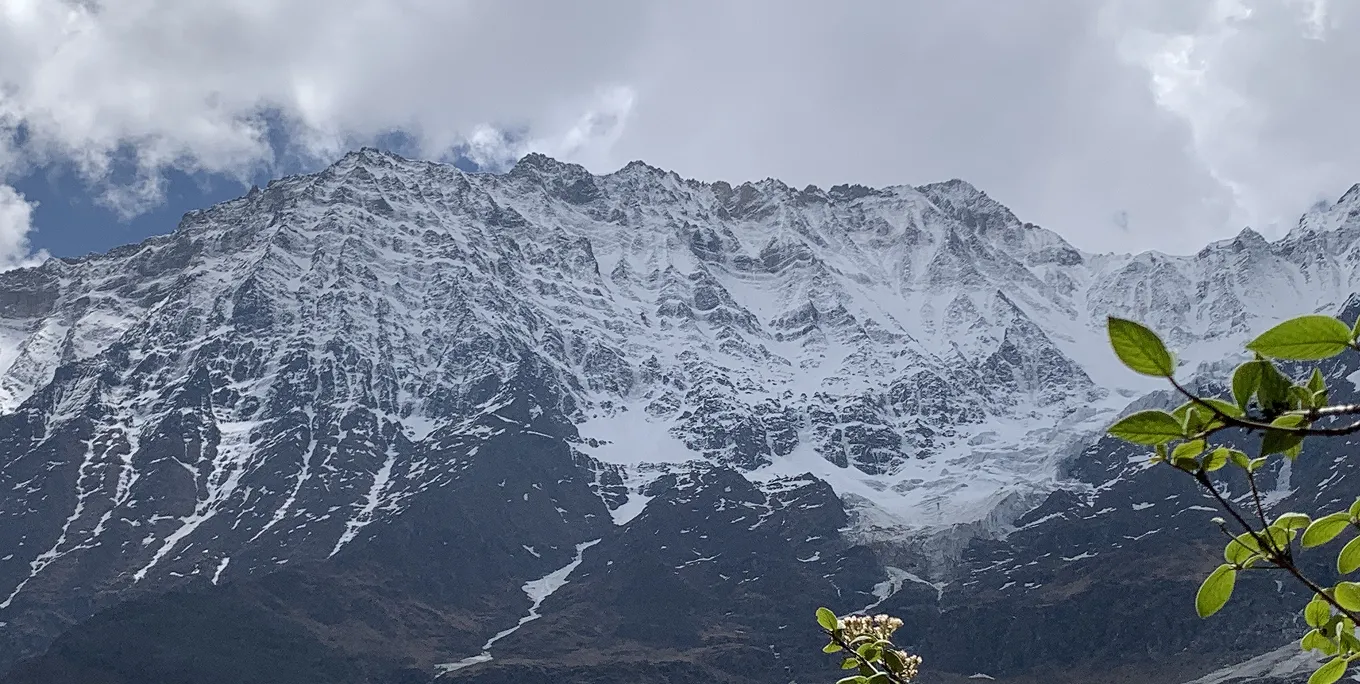
Spanning 14 to 18 days and covering a rugged loop of roughly 150 to 170 km (93–105 miles), the trail follows the thundering waters of the Bheri and Tarap rivers through narrow, emerald-green gorges. As you ascend, the terrain transitions from lush pine forests into a stark, windswept landscape that resembles the arid Tibetan plateau. To complete the circuit loop, trekkers must conquer two challenging mountain passes over 5,000 meters back-to-back: Numa La Pass (5,115m / 16,781ft) and Baga La Pass (5,070m / 16,633ft). These demanding alpine crossings reward your endurance with boundless, staggering views across the Dhaulagiri range.
The absolute crown jewel of the route is the hypnotic, crystal-clear turquoise waters of Phoksundo Lake (3,611m). Ringed by vertical rock cliffs and traditional stone villages like Ringmo, this deep-blue alpine water basin contains no aquatic life, allowing it to act as a flawless mirror for the surrounding peaks. As you wind through the scenic valley of Dho Tarap—one of the highest human settlements on Earth—you gain rare access to the global heartland of the ancient Bon-Po religion, a spiritual tradition that pre-dates Tibetan Buddhism. The wild cliffs also serve as a critical habitat for rare wildlife, including the endangered Snow Leopard and herds of Blue Sheep.
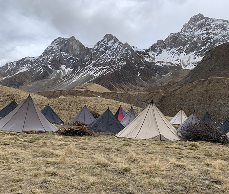
Because it sits in a rain-shadow zone, Lower Dolpo is one of the few circuits in Nepal ideal for summer and monsoon trekking (June to September), remaining dry when the rest of the country experiences heavy rains. Supported by a mix of basic local teahouses and fully serviced camping setups, Himal Trek Nepal completely manages your experience. We secure your specialized government RAPs, coordinate your complex internal flights to the Juphal airstrip via Nepalgunj, handle full camping kitchen logistics, and pair your group with elite, licensed local guides equipped with advanced high-altitude rescue tools.
Day 01
Welcome to Nepal! A Himal Trek Nepal representative will greet you at Tribhuvan International Airport (TIA) with a traditional warm welcome. A private vehicle will transfer you to your hotel in the tourism hub of Thamel. Spend the afternoon resting, exploring the vibrant local streets, or handling last-minute gear shopping. In the evening, join your guide for a pre-trip briefing and a welcome dinner.
.png)
Day 02
Enjoy a relaxed morning in Kathmandu while our office finalizes your Department of Immigration Restricted Area Permits (RAP). In the afternoon, take a private transfer to the domestic airport for your scenic flight to Nepalgunj. This sub-tropical city sits on the fertile Terai plains near the Indian border. You will spend the night here to catch an early morning connection into the mountains.
Day 03
Board an early morning mountain hopper flight to the high-altitude dirt airstrip of Juphal. Meet your local porter team, assemble your gear, and hit the trail. The path descends gently through terraced farmlands and small villages, following the roaring waters of the Bheri River. The easy introductory walk ends at Dunai, the administrative headquarters of the Dolpo district, for a comfortable night.
Day 04
Walk alongside the southern bank of the thundering Bheri River, crossing several iron suspension bridges. The trail carves through narrow, emerald-green gorges lined with pine trees. You will pass isolated homesteads before ascending steadily toward the historic fortress village of Tarakot. This old toll station once guarded ancient trans-Himalayan salt-trading routes.
Day 05
Leave the main river and follow the Tarap Khola river canyon northward. The terrain becomes dramatically rugged, featuring steep canyon walls and suspension bridges hung high above rushing rapids. Walk through deep forests of cedar and wild rose before arriving at the wilderness campsite of Laini Odar (Laini Cave), a classic resting spot for local yak caravans.
Day 06
Prepare for a thrilling day of canyon hiking. The trail is carved directly into the sheer rock faces, at times stepping over stone stairs just a few feet above the rushing river. As you climb out of the narrow gorge, the valley begins to open up slightly into a broader, arid landscape. You will cross a confluence of rivers to reach your high wilderness camp at Nawarpani.
Day 07
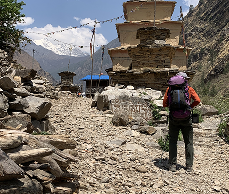
The trees disappear completely as you break past the tree line into a windswept landscape that looks exactly like the Tibetan plateau. Pass ancient stone Mani walls and spinning prayer wheels to enter Dho Tarap. This sprawling, flat valley is famous for being one of the highest permanent human settlements on Earth, inhabited by indigenous communities practicing the pre-Buddhist Bon-Po religion.
Day 08
A crucial rest day to prepare your body for the upcoming 5,000-meter passes. Spend your day touring local clay-stone monasteries, interacting with Bon-Po monks, and watching local traders manage their yak herds. This raw cultural immersion offers a rare look at a nomadic lifestyle entirely frozen in time. Your guide will check your blood oxygen saturation using a pulse oximeter.
Day 09
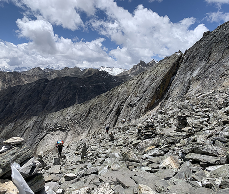
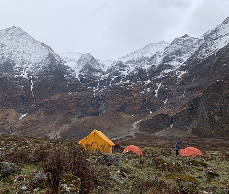
A short but physically demanding uphill march. Leave the Dho Tarap valley floor and climb a steady, steep ridge alongside a small glacial stream. The air thins rapidly as you enter a stark, rocky world of scree and boulder fields. Establish camp at Numa La Base Camp, resting early to save your energy for the massive double-pass challenge ahead.
Day 10
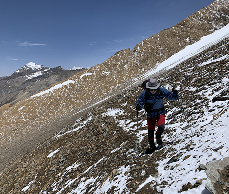
Wake up before dawn for the ultimate physical crown jewel of the circuit. A slow, steady climb takes you up a long snow-slope to the summit of Numa La Pass (5,115m). The high point rewards your endurance with a boundless, staggering view of the Dhaulagiri range and the vast deserts of Tibet. After celebrating at the prayer flags, make a long, steep descent down to the riverside camp of Pelung Tang.
Day 11
Another epic day on the trail. Tackle a steep, zig-zagging climb to conquer the second high-altitude barrier: Baga La Pass (5,070m). The ridge offers a dramatic panoramic look at the Kanjirowa mountain walls. From the pass, enjoy a long, steady downhill descent that transitions beautifully from stark moraines back into deep pine forests, leading you directly to the traditional stone village of Ringmo.
Day 12
Wake up to view the hypnotic, crystal-clear turquoise waters of holy Phoksundo Lake. This deep-blue alpine basin contains no aquatic life, making it a perfect, mirror-like sanctuary. Spend your day walking along the lakeside cliffs, touring the ancient local Bon-Po monastery on the opposite shore, and photographing the spectacular 167-meter-high waterfall that drains the lake basin.
Day 13
Begin your final long walk back toward the lowlands. The trail follows a pleasant, steady downhill slope through dense forests of birch, pine, and wild bamboo. Keep your eyes on the cliffs for a chance to spot rare Himalayan blue sheep or forest birds. Pass through small local settlements to set up your final wilderness camp at the quiet village of Shyanta.
Day 14
Complete your hiking circuit with a short morning walk back up to the airstrip of Juphal. Board your morning connection flight to Nepalgunj, followed immediately by your transit flight straight back to Kathmandu. Our private vehicle will meet you at the airport and transfer you back to the comfort of your Thamel hotel for a long hot shower and a farewell celebration dinner.
Day 15
Enjoy a final breakfast at your hotel. Spend your remaining hours handling souvenir shopping or taking a relaxed walk through the Thamel alleys. Our team will manage your private vehicle transfer to Tribhuvan International Airport (TIA) three hours prior to your flight, concluding your life-changing mid-western adventure with Himal Trek Nepal.

Didn’t find what you were looking for?
So why not plan your own trip. It takes only 2 minutes.

 15 Days
.svg) 5,545m/18,192ft