Mustang Region
Recommendiation Recommended by 99% of travelers
Trip Facts
Difficulty
Difficulty
Moderate to Challenging
Max Altitude
Max Altitude
3,840m/12,598ft
Accommodation
Accommodation
Hotel in Kathmandu / Tea houses on trek
Activity
Activity
Trekking
Best Season
Best Season
Mar–May & Sep–Nov
Duration
Duration
12-15 Days
Trip Overview

Discover Upper Mustang: The Last Hidden Kingdom of Nepal

Mustang is a distinct world of arid desert landscapes and deeply rooted Tibetan heritage. Widely considered the Last Hidden Kingdom of Nepal, this restricted trans-Himalayan frontier shares its northern border directly with Tibet, China. Historically known as the Kingdom of Lo, Upper Mustang once served as a vital, fortified branch of the ancient salt trade route linking Tibet and India, remaining entirely closed to foreign travelers until 1992.

A Living Museum of Trans-Himalayan Culture:

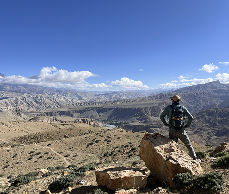
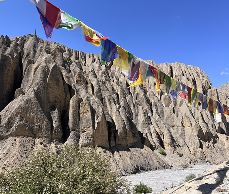
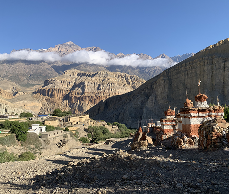
The true heart of this stark, rain-shadow landscape lies in its indigenous people, the Loba, who have fiercely protected their vibrant traditions through centuries of absolute geographical isolation. As you trek or journey past wind-sculpted red canyons and thousands of mysterious, prehistoric sky caves, you step directly into a living museum of Tibetan Buddhist culture. Here, ancient mud-brick villages, white-washed chortens, and active 8th-century monasteries like Ghar Gompa form the timeless backdrop of daily life.

The Royal Legacy of Lo Manthang:

The ultimate symbol of this enduring legacy is the fabled, walled capital of Lo Manthang. Within its medieval fortifications, the descendants of the original royal lineage still reside, safeguarding a way of life that has vanished elsewhere. Each spring, the city awakens for the vibrant, multi-day Tiji Festival, bringing centuries-old spiritual mythologies to life through sacred monastic mask dances. Upper Mustang is not merely a travel destination; it is a profound journey into one of the last intact medieval kingdoms on Earth.

Trip Overview

Day 1

Arrive at Tribhuvan International Airport. A Himal Trek Nepal representative will meet you at the terminal and transfer you to your hotel. After checking in, take time to rest. In the evening, meet your licensed trekking guide for your pre- departure briefing. Sort out gear, finalize last-minute preparations, and ask questions before departure. Arrival in Kathmandu.

Max altitude
Max altitude
1,400m/4,593ft

Day 02

Full rest day to explore historic stupas while your original passport is submitted for restricted area permit verification.

Day 03

Scenic 25-minute flight or a 6-hour overland drive along the Trishuli River. Evening relaxation by the peaceful lakeside.

Day 04

Walking along the windy, flat riverbed to Kagbeni, the medieval gateway checkpoint into Upper Mustang.  Pass your restricted permits at the boundary checkpoint at Kagbeni and trail up along the eastern bank of the river, passing through distinctive red-sandstone canyon walls to reach Chele village.

Max altitude
Max altitude
3,050m/10,007ft

Day 05

Cross the challenging Taklam La Pass (3,624m) and Dajori La Pass (3,735m), offering your first wide views of the cold desert plateau and distant sky caves.

Max altitude
Max altitude
3,800m/12,467ft

Day 06

Cross the Nyi La Pass (4,010m) and descend past Ghami's ancient mani wall—the longest, oldest, and most intricately carved prayer wall in the Mustang region.

Max altitude
Max altitude
3,520m/11,549ft

Day 07

Cross a rugged volcanic landscape to Tsarang, home to a massive 5-story medieval white palace aned a spectacular 14th-century monastery housing ancient Tibetan frescoes.

Max altitude
Max altitude
3,560m/11,680ft

Day 08

Climb the Lo La Pass (3,950m) to catch your first breathtaking, panoramic view of the fabled, white-washed walled fortress capital of Lo Manthang.

Max altitude
Max altitude
3,840m/12,598ft

Day 09

Full day exploring the royal palace, ancient monasteries (Jampa Lhakhang and Thubchen Lhakhang), or renting a horse/jeep to visit the multi-tiered Chosar Sky Caves.

Day 10

Take an alternative western return route to visit Ghar Gompa (Lo Gekar), an 8th-century sanctuary recognized as one of the oldest active Tibetan Buddhist monasteries in the world. Settle beneath the massive, deep-red cliffs of Dhakmar.

Max altitude
Max altitude
3,820m/12,533ft

Day 11

Re-traverse the high, wind-sculpted sand dunes and passes, catching magnificent sunset angles over the Nilgiri and Dhaulagiri mountain ranges.

Max altitude
Max altitude
3,800m/12,467ft

Day 12

A long, sustained downhill descent backtracking through Chele to reach the farming oasis village of Chhusang.

Max altitude
Max altitude
2,980m/9,777ft

Day 13

Complete the final trekking leg via the ancient holy pilgrimage site of Muktinath or retrace the riverbed back to Jomsom for a late-afternoon celebration with your crew.

Max altitude
Max altitude
2,720m/8,924ft

Day 14

Morning mountain flight back to Pokhara, followed by a domestic flight to Kathmandu. Hotel check-in and farewell dinner.

Day 15

Enjoy your final breakfast in Kathmandu. A Himal Trek Nepal representative will pick you up from your hotel and transfer you to Tribhuvan International Airport exactly three hours before your scheduled flight time, marking the conclusion of your journey.

Trip Cost
What to Expect
  • 3 nights accommodations during Kathmandu stay in twin sharing basis.
  • 1 night accommodation during Pokhara stay in twin sharing basis.
  • Internal Flights & Ground Transit: • Round-trip domestic flights between Kathmandu, Pokhara and Jomsom. • Airport transfers via private vehicle in Kathmandu and Pokhara,
  • Required Permits & Fees: • Upper Mustang restricted Area Permit • Annapurna Conservation Park Entry Permit. • TIMS (Trekkers' Information Management Systems) card if applicable.
  • Accommodation Along the Trail: • Standard twin-sharing rooms in local tea houses or mountain lodges for 10 nights.
  • Trekking Support Staff: • Salary, insurance, food, accommodation, and equipment for a licensed English-speaking guide. • Salary, insurance, food, and accommodation for porters (typically 1 porter shared between 2 trekkers, carrying up to 20–25kg total).
  • Meals on the Trek: • Full board meals: 3 meals a day (Breakfast, Lunch, Dinner) chosen from the tea house menu. • Post-dinner hot beverages (tea or coffee) or a cup of hot water.
  • Safety Gear: 1. First-aid kit carried by the guide, including an oximeter to monitor oxygen levels daily.
What not to Expect
  • International Travel Costs: • International airfare to and from Kathmandu. • Nepal Tourist Visa fee (payable in cash USD upon arrival at Tribhuvan International Airport).
  • Travel and Emergency Insurance: • Mandatory: Travel insurance that explicitly covers emergency helicopter evacuation up to 6,000 meters (most basic plans cap out at 3,000m).
  • Meals before & after trek in Kathmandu & extra stay in Kathmandu hotels other than mentioned above: • Hotel up-gradation might cost extra depending on your request. • Hotel up-gradation might cost extra depending on your request.
  • 4. Trail Luxuries & Services (Tea house Add-on): • Hot Showers: Gas or solar-heated showers cost between $3 to $7 USD per shower (prices increase with altitude). • Device Charging: Power banks, phones, and camera battery charging cost $2 to $5 USD per full charge. • Wi-Fi / Connectivity: Wi-Fi prepaid cards cost roughly $5 to $10 USD for a set amount of data but in few places during trek there will be no internet. • Drinking Water: Bottled water costs $1 to $4 USD per bottle (it is highly recommended to bring water purification tablets/filters instead).
  • Personal Trekking Gear: • Down jackets, sleeping bags, hiking boots, trekking poles, and backpacks (though sleeping bags and jackets can be rented cheaply in Kathmandu for around $1 to $2 a day).
  • Beverages & Snacks: • Alcoholic drinks (beer, spirits), specialty coffees, soft drinks, and bakery items or trail cafes.
  • Tips & Gratitude: • Tipping guides and porters is custom and highly expected. The industry standard is roughly 10% to 15% of your total trek cost, pooled together by the group and handed out on the final evening
What to Expect
  • The Walled City of Lo Manthang: Explore the ancient, 15th-century capital city, home to the historic royal palace and deeply revered Buddhist monasteries.
  • Mystical Ancient Sky Caves: Witness the awe-inspiring, multi-story burial and meditation caves carved high into vertical canyon walls thousands of years ago.
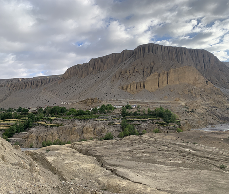
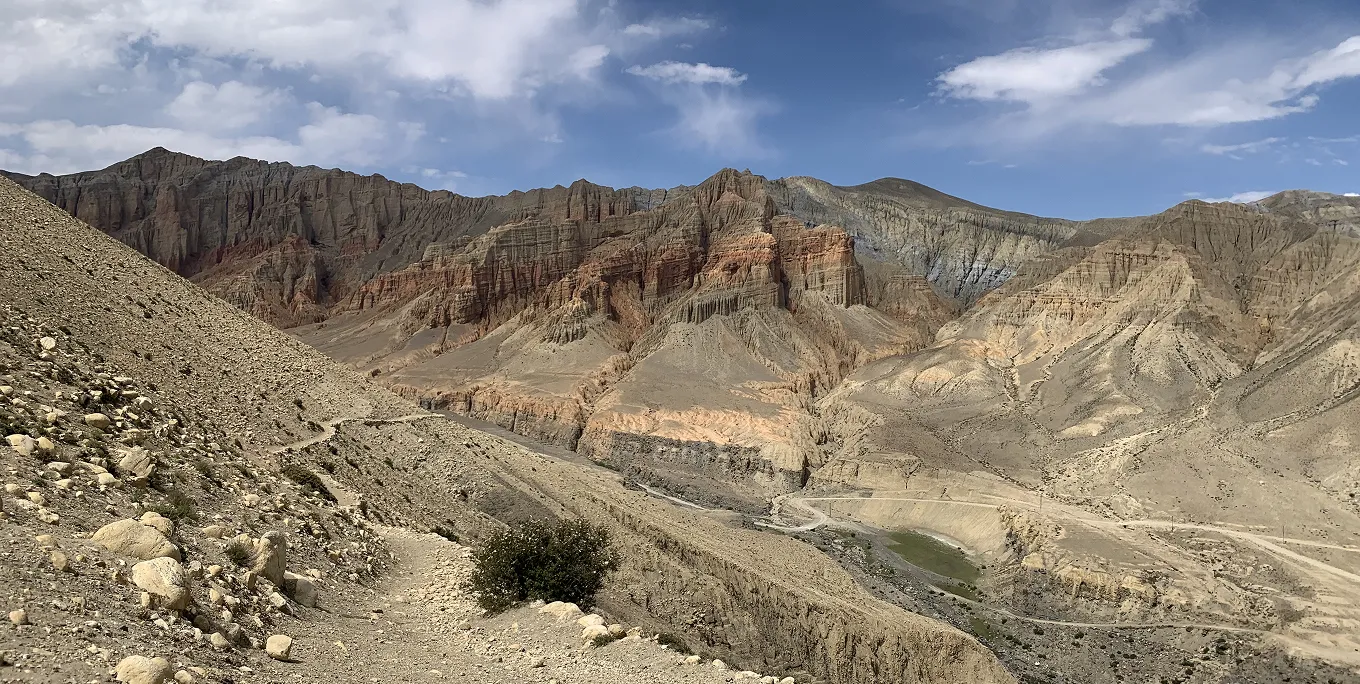
  • Stark Rain-Shadow Landscapes: Trek through a dramatic, wind-swept desert filled with striking rock formations, deep gorges, and vibrant ochre cliffs.
  • Pure Tibetan-Buddhist Culture: Experience the unchanged lifestyle, unique language, and vibrant festivals of the indigenous Loba people.
  • Centuries-Old Monasteries: Visit the active, historic monasteries of Thubchen, Jampa, and Ghar Gompa—home to priceless ancient wall paintings.
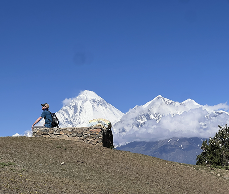
  • Panoramic Mountain Backdrops: Enjoy spectacular, dry-climate vistas of Nilgiri, Annapurna, and the massive Dhaulagiri massif from a unique northern perspective.
  • Flexible Overland Travel: Choose between a traditional foot trek or a rugged, high-clearance 4x4 jeep expedition along the scenic Kali Gandaki corridor.
FAQs

Upper Mustang is a highly protected Restricted Area managed by the government to preserve its fragile 15th-century Tibetan culture and pristine desert ecology. The government controls visitor numbers through a specialized permit pricing system.

Unlike standard trekking regions, Upper Mustang uses a daily-rate permit system. • Restricted Area Permit (RAP): USD 50 per day, per person for every day spent inside the restricted zone (Kagbeni onwards). • ACAP Permit: USD 30 per person for entry into the Annapurna Conservation Area. • TIMS Card: USD 20 per person. (Note for your site: State clearly if your package price automatically includes all of these fees).

Yes, under updated regulations, solo foreign travelers are permitted to enter Upper Mustang, but you cannot trek entirely without supervision. Every trekker, whether traveling solo or in a group, must hire a mandatory, government-licensed guide through a registered Nepali trekking agency to clear the checkpoints.

The trek is classified as moderate. The highest altitude reached is relatively low compared to other treks, peaking at around 3,840 meters (12,598 feet) at Lo Manthang. However, the region is highly arid, exposed to intense daily winds, and features dusty, undulating terrain that requires decent stamina and knee strength.

Yes! Upper Mustang is one of the very few "monsoon treks" in Nepal. Because it sits geographically behind the massive Annapurna and Dhaulagiri mountain walls, it lies entirely in a rain-shadow zone. While the rest of Nepal experiences heavy rain from June to August, Upper Mustang remains dry, sunny, and perfect for trekking.

Accommodation is provided in local teahouses and traditional homestays. Due to road connectivity, the teahouses here are often highly developed, offering comfortable twin beds, heavy blankets, and sometimes attached bathrooms. The food menu includes traditional Dal Bhat, Tibetan bread, stews (Thukpa), and popular international dishes like pasta and pancakes.

It depends entirely on your travel style. Because a dirt road now connects Kathmandu all the way to Lo Manthang, you can choose a rugged 4x4 Jeep overland tour (ideal for those short on time or wanting to avoid physical strain) or a traditional foot trek using alternative, quiet trails that completely avoid the main vehicle road.

• Teahouse Lodging: Expect basic, cozy tea houses with twin sharing beds, communal dining spaces, and shared bathrooms carefully vetted by our team. • Internet and Wi-Fi: Available in most lower-elevation villages for a small fee, but connection becomes unreliable and slow at higher altitudes. • Charging Devices: Electricity is accessible at most teahouses, though hosts usually charge a fee per device higher up the trail. • Water Availability: Safe drinking water is available via boiled water from teahouses, water purification tablets, or UV filters; buying plastic bottles is discouraged.

• Physical Fitness: You need a moderate to high level of cardiovascular fitness; training with stairs and cardio 2–3 months prior is highly recommended. • Altitude Sickness: Acute Mountain Sickness (AMS) is a risk above 3,000 meters; our guides are trained in altitude safety to monitor your pacing and hydration. • Travel Insurance: Your policy must cover high-altitude emergency helicopter evacuation up to 6,000 meters before starting your trip with us. • Packing Essentials: Prioritize sturdy hiking boots, thermal layers, a down jacket, a 4-season sleeping bag, and reliable rain gear.
Client Reviews
Sent Us Review

Your personal details will not be published.

Plan a Trip

Didn’t find what you were looking for?

So why not plan your own trip. It takes only 2 minutes.
$ 1999 /Per Person
- +
Sujita Ghale
Sujita Ghale
Executive Director
9841265675
More Awesome Trips
Everest Base Camp
Nepal
Everest Base Camp
Duration 15 Days Altitude 5,545m/18,192ft
From
$ 1599
Poon Hill Trek (Annapurna Panorama)
Nepal
Poon Hill Trek (Annapurna Panorama)
Duration 7-8 Days Altitude 3,350m/10,991ft
From
$ 599
Annapurna Base Camp
Nepal
Annapurna Base Camp
Duration 12-13 Days Altitude 4,130m/13,550ft
From
$ 999