Recommended by 99% of travelers
Recommended by 99% of travelers
Recommended by 99% of travelers
.png)
.png)

.png)
.png)
.png)
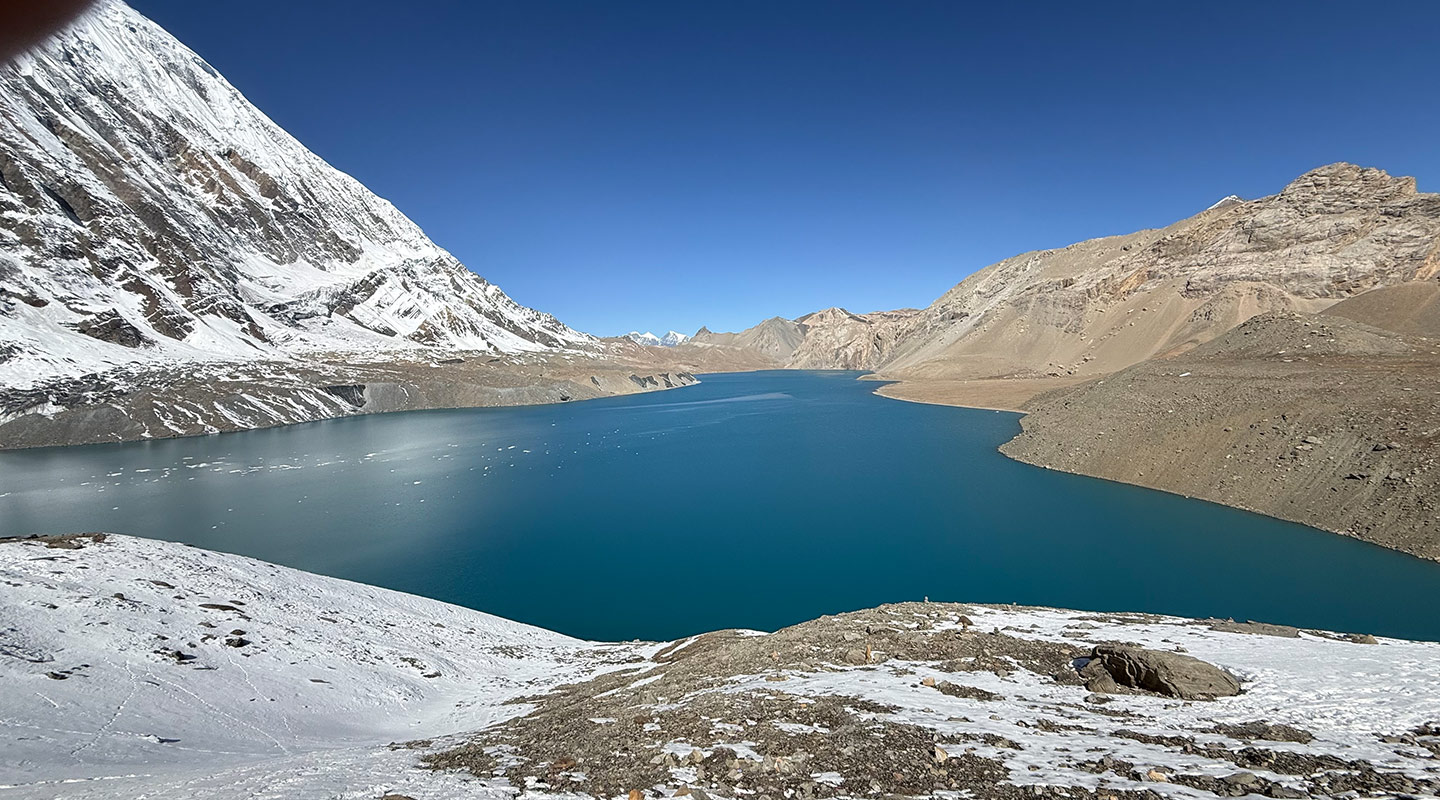
Nar Phu lies in the Annapurna circuit section of the trekking routes, spanning roughly of 250 km. The trail showcases a stunning transitional landscape, shifting from lush subtropical river valleys and agricultural terraces to high alpine deserts. Located within the protected Annapurna conservation area, the region is also home to spectacular high altitude glacier lakes, like ice lake and Tilicho lakes. Along the way, trekkers walk through ancient culturally rich villages, with the lower sections populated by Gurung and Magar communities, while the upper valleys are deeply rooted in Tibetan Buddhism and Bon spiritual traditions.
Nar Phu Valley is considered as “The Lost Frontier of the Himalayas”
Tucked away in the rugged rain-shadow of the northern Annapurna massif lies the hidden enclave of Nar and Phu. This is a land that time completely forgot. Composed of two distinct, ancient villages inhabited by people of Tibetan origin, this region was entirely closed to outsiders until late 2002.
Even today, it remains a heavily regulated, restricted area requiring specialized government permits. Because it receives a fraction of the tourists that visit the neighboring Annapurna Circuit, it stands as a wild, pristine sanctuary of authentic Tibetan-Buddhist culture, medieval architecture, and raw trans-Himalayan landscapes. The Twin Valleys explained while frequently grouped together, the two medieval settlements offer entirely distinct atmospheres and landscapes for your clients to explore:
The Fortress of Phu (4,080m)
Phu is an architectural masterpiece of the ancient world. The village appears out of nowhere, clinging like a stone fortress to a massive crag overlooking a roaring river canyon.
The Architecture: Natural mud-and-stone houses are stacked vertically on top of one another, sharing roofs and connected by a maze of dark, narrow stone tunnels.
The Culture: The residents (known as Nar-Phu-wa) live a traditional agro-pastoral life, spinning yak wool, farming high-altitude barley, and herding blue sheep.
The Spiritual Heart: Hovering directly above the village is the ancient Tashi Lhakhang Monastery, one of the oldest and most important spiritual epicenters in the trans-Himalayan belt.
The Terraced Valley of Nar (4,110m)
Larger and livelier than its twin, Nar Village sits on a wide, sweeping alpine plateau surrounded by towering snow-capped peaks.
The Landscape: Unlike the rocky canyons of Phu, Nar is flanked by beautiful, emerald-green terraced fields where locals grow cold-weather crops.
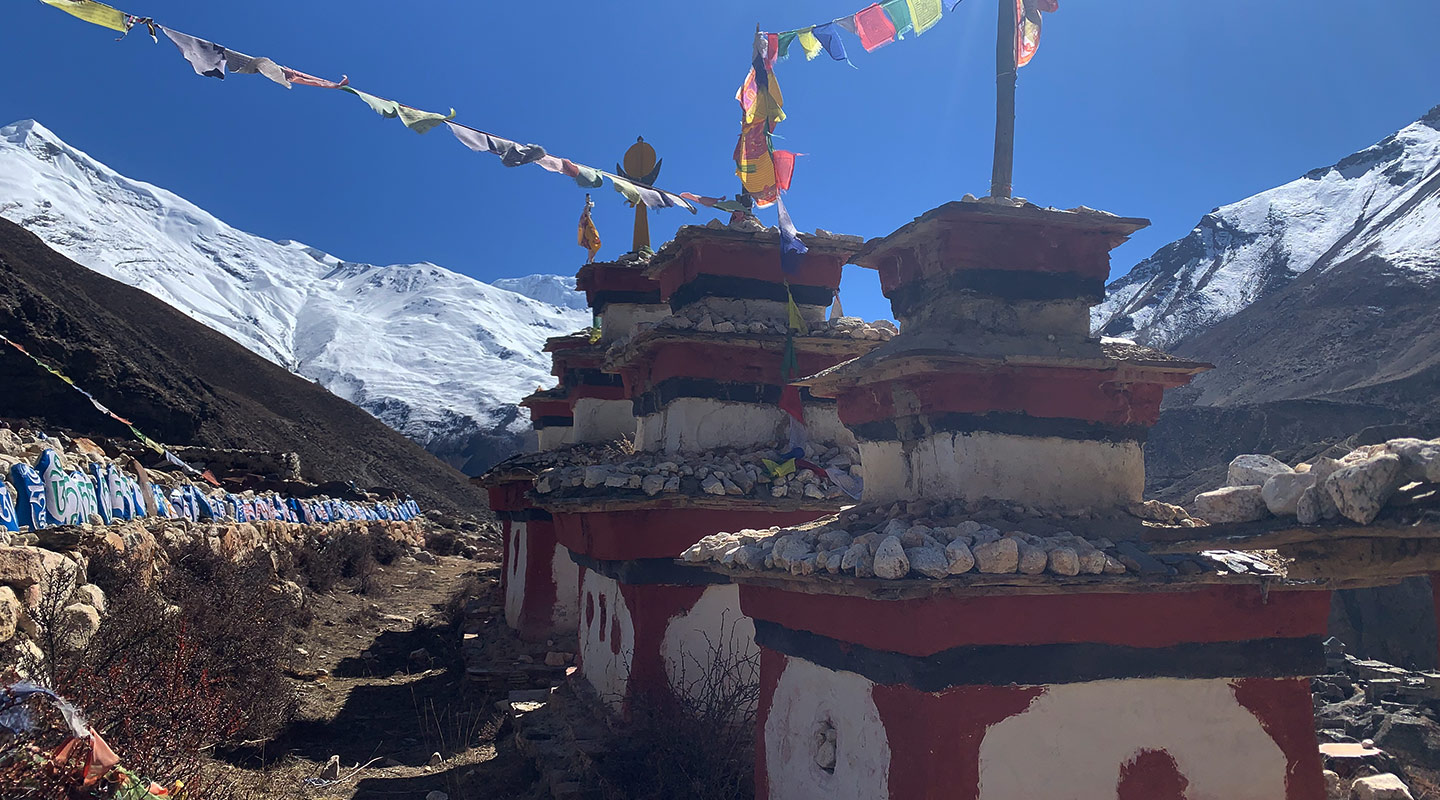
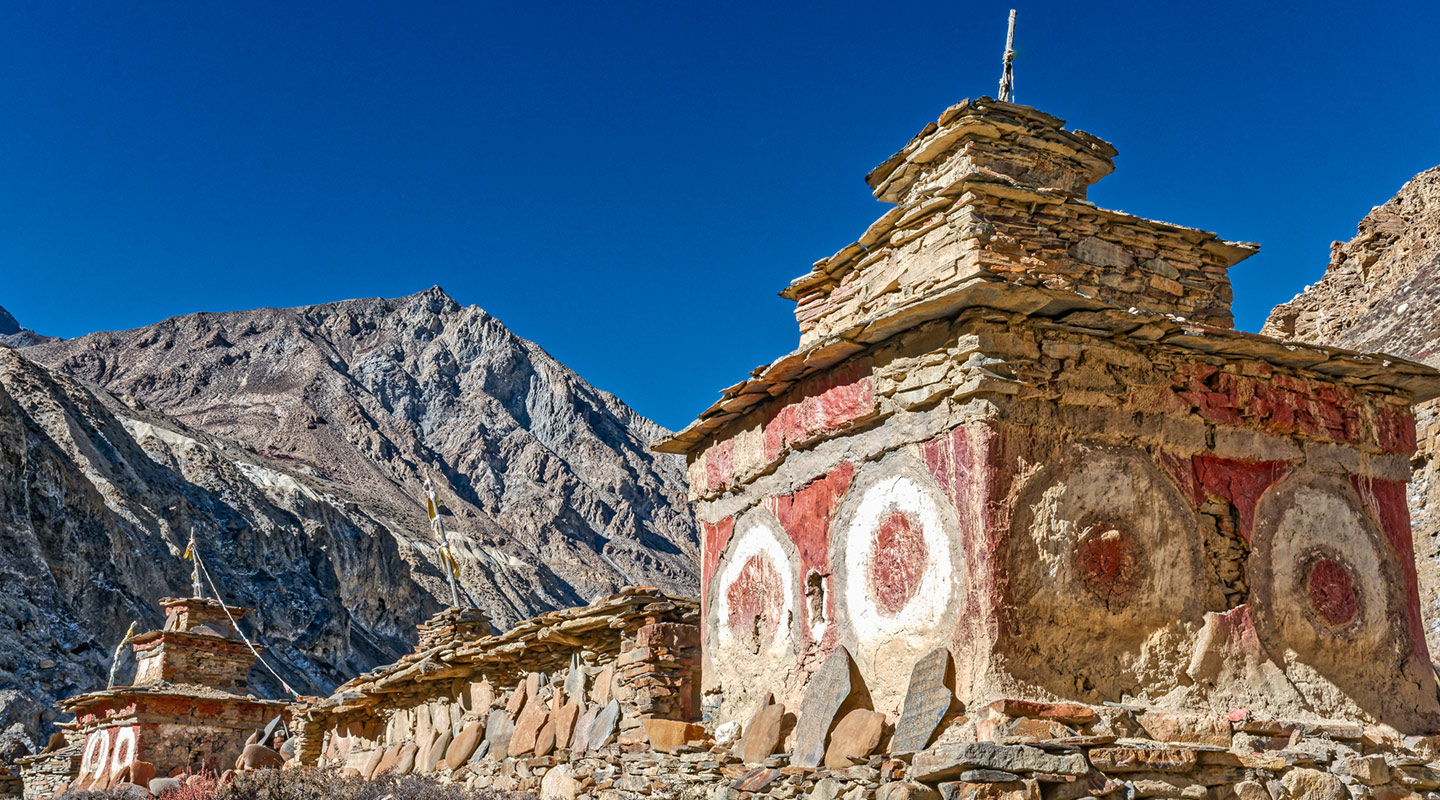
The Atmosphere: Nar is known for its vibrant community life, colorful prayer-flag-lined streets, and beautiful, intricately painted entrance chortens (Buddhist shrines).
The Gateway Ridge: Nar serves as the ultimate high-altitude staging ground for trekkers preparing to tackle the formidable Kang La Pass (5,309m).
Day 1
Arrive at Tribhuvan International Airport. A Himal Trek Nepal representative will meet you at the terminal and transfer you to your hotel via a private vehicle. After checking in, take time to rest. In the evening, meet your licensed trekking guide for your pre-departure briefing. Sort out gear, finalize last-minute preparations, and collect original passports to process your restricted area permits.
Day 2
While our office staff secures your immigration clearance and special Nar Phu restricted area permits, enjoy a guided sightseeing tour of Kathmandu's finest UNESCO World Heritage sites. Stand before the ancient stupas of Boudhanath and Swayambhunath, and explore the historic temples of Kathmandu Durbar Square before an early packing night.
Day 3
Board our private vehicle for an early morning drive alongside roaring river gorges to Besisahar. Upon reaching Besisahar, switch to a local 4x4 jeep to navigate the rugged, cliff-hanging mountain roads of the Marsyangdi River valley. Arrive by late afternoon in the stone-paved village of Jagat.
Day 4
Begin walking along the traditional Annapurna Circuit trail. Cross suspension bridges, pass cascading waterfalls like the famous Chamje falls, and enter the Manang district. Climb steadily through terraced bamboo groves and rocky trails until you reach the bustling junction village of Dharapani.
Day 5
Follow the trail as it winds upward through dense pine, oak, and rhododendron forests. Enjoy beautiful, framed views of Annapurna II and Lamjung Himal. Your destination tonight is the village of Koto, the strategic police checkpoint and entry gateway to the restricted Nar Phu valley.
Day 6
Hand over your restricted area permits at the Koto checkpoint and leave the main tourist track entirely behind. Cross a suspension bridge over the Marsyangdi river and enter a dramatic, narrow rocky gorge along the Nar Khola river. Climb steeply through raw, uninhibited pine wilderness and cave shelters before emerging onto the high-altitude Tibetan plateau of Meta.
Day 7
Walk along an extraordinary, windswept desert landscape reminiscent of Tibet. Pass abandoned Khampa (Tibetan warrior) settlements and old chortens. Cross an impressive suspension bridge hanging high over a deep canyon canyon before passing through the ancient monolithic stone gate of Phu Village. You have officially stepped back in time.
Day 8
Take a vital rest day to help your body adapt to the thin air. Wander through the maze-like stone alleyways of Phu, watching locals spin yak wool. Hike up to the historic Tashi Lhakhang Monastery, sitting on a high crag, to receive a blessing from the local lama. Enjoy close-up views of Himlung Himal and Kang Guru.
Day 9
Retrace your steps back down the valley out of Phu, descending through the rocky gorges. Branch off toward the remote settlement of Nar Phedi. Tonight offers a deeply unique cultural experience: you will stay inside the Nar Phedi Monastery, sharing a simple dinner with the resident monks and sleeping in their peaceful guest quarters.
Day 10
A short but steeply ascending trail winds up the mountain flank, passing beautiful painted chortens. Arrive by lunchtime in Nar Village, which is larger, livelier, and more architecturally complex than Phu. Spend your afternoon resting, checking your high-altitude pass gear, and exploring the traditional terraced barley fields.
Day 11
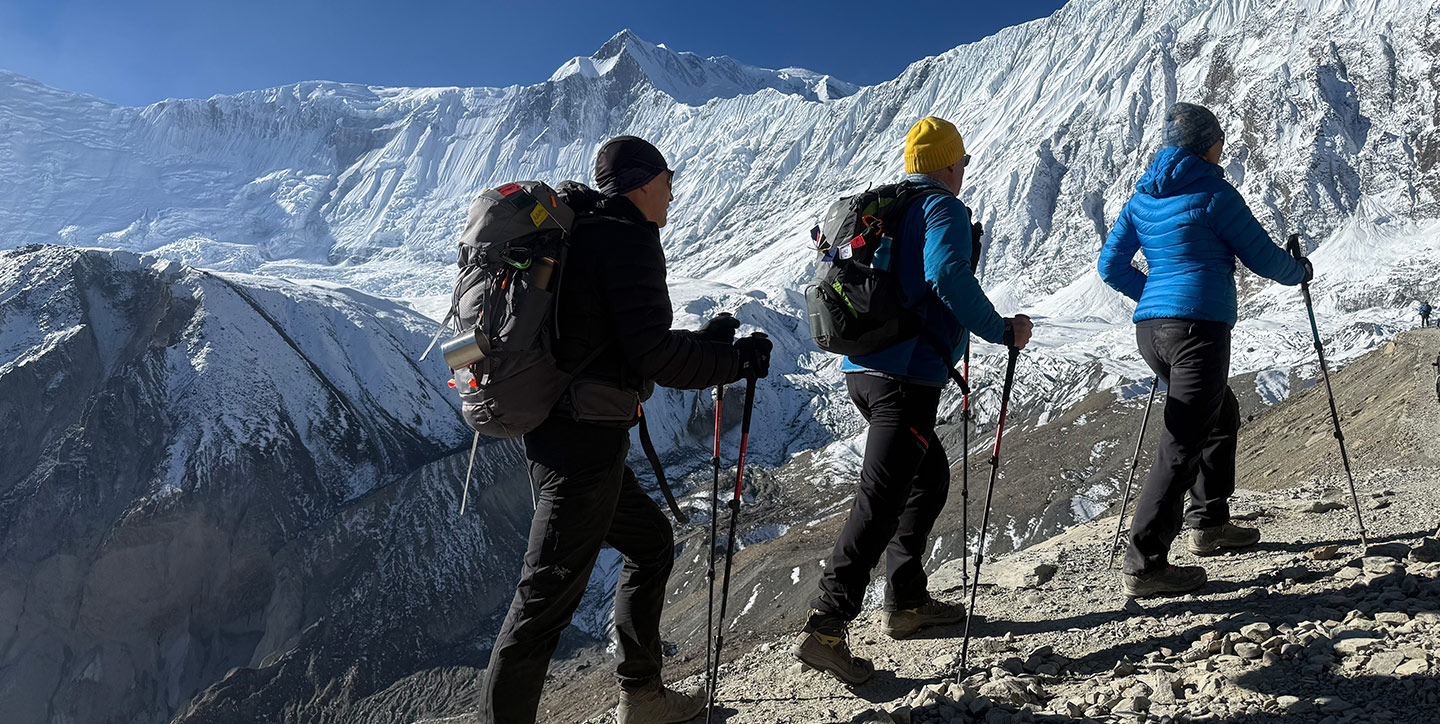
A grueling 4:00 AM alpine start under freezing star-filled skies. Climb a steep, rocky scree slope to the crest of Kang La Pass (5,309m). Your reward is an unparalleled, close-up aerial panorama of the entire Annapurna massif. Make a long, steep knee-jarring descent down the western flank to rejoin the classic Annapurna Circuit route at the beautiful village of Ngawal.
Day 12
Enjoy an easier, undulating trail that follows the wide, flat floor of the valley. Enjoy dramatic views of Annapurna II, III, and IV tracking directly on your left. Reach the bustling mountain metropolis of Manang by lunchtime. Take advantage of modern comforts like hot bakeries, espresso bars, and gear shops to recharge.
Day 13
Leave the flat valley floor and begin a slow, measured ascent up into the high alpine zone. Cross the Jarsang Khola river via a suspension bridge and watch the slopes closely for herds of wild blue sheep or Himalayan tahrs. Arrive at the high pastures of Yak Kharka by afternoon.
Day 14
Enjoy a short, slow-paced trekking day designed to conserve your physical energy for the big pass tomorrow. Walk through a desolate, rocky landscape, crossing a suspension bridge before navigating a minor landslide zone to arrive at the base camp of Thorong Phedi. Drink plenty of water and rest early.
Day 15
The ultimate challenge of the journey. Wake up at 3:30 AM and climb steeply through snow and rock to the legendary Thorong La Pass (5,416m), the widest mountain pass in the world. Celebrate your crossing among the colorful prayer flags before embarking on a massive, steep 1,600-meter descent into the arid desert terrain of Mustang, ending at the holy Muktinath Temple.
Day 16
Board a rugged, full-day mountain vehicle drive through the wind-whipped Kali Gandaki gorge, known as the deepest canyon in the world. Watch the desert canyons of Lower Mustang give way to lush green forests and waterfalls. Arrive by evening at your hotel in Pokhara for a hot shower, a cold beverage, and a comfortable bed.
Day 17
Bid farewell to the mountains and travel back to Kathmandu. Check into your hotel and enjoy a free afternoon for self-exploration. Do some last-minute souvenir shopping in Thamel, visit ancient temples, or celebrate your successful journey with a farewell dinner hosted by Himal Trek Nepal.
Day 18
Enjoy your final breakfast in Kathmandu. A Himal Trek Nepal representative will pick you up from your hotel and transfer you to Tribhuvan International Airport exactly three hours before your scheduled flight time, marking the conclusion of your journey


Didn’t find what you were looking for?
So why not plan your own trip. It takes only 2 minutes.

 15 Days
.svg) 5,545m/18,192ft
5,545m/18,192ft