 Recommended by 99% of travelers
Recommended by 99% of travelers
Recommended by 99% of travelers
.png)
.png)

.png)
.png)
.png)
Island Peak is Nepal’s most famous trekking peak. Locally, it is called Imja Tse (6,189m / 20,305ft). It lies in the Everest Region inside Sagarmatha National Park. This peak is not an independent mountain. It is a ridge extension of Lhotse. It rises directly out of the Lhotse glacier. The peak resembles an island in ice. Its semi-technical nature is ideal for beginners. It serves as a perfect stepping stone into mountaineering .
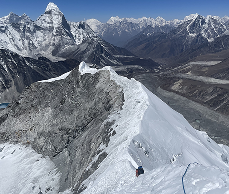
The 14-to-18-day expedition blends trekking with climbing. You will follow the classic Everest Base Camp Trek route first. Your team will acclimatize in Namche Bazaar. You then branch off toward Chhukung village. The summit day provides a true alpine experience. Climbers use crampons, ice axes, and climbing harnesses. You will use jumar ascenders on fixed ropes. This allows you to scale a steep 100-meter headwall. You then finish on a sharp knife-edge ridge.
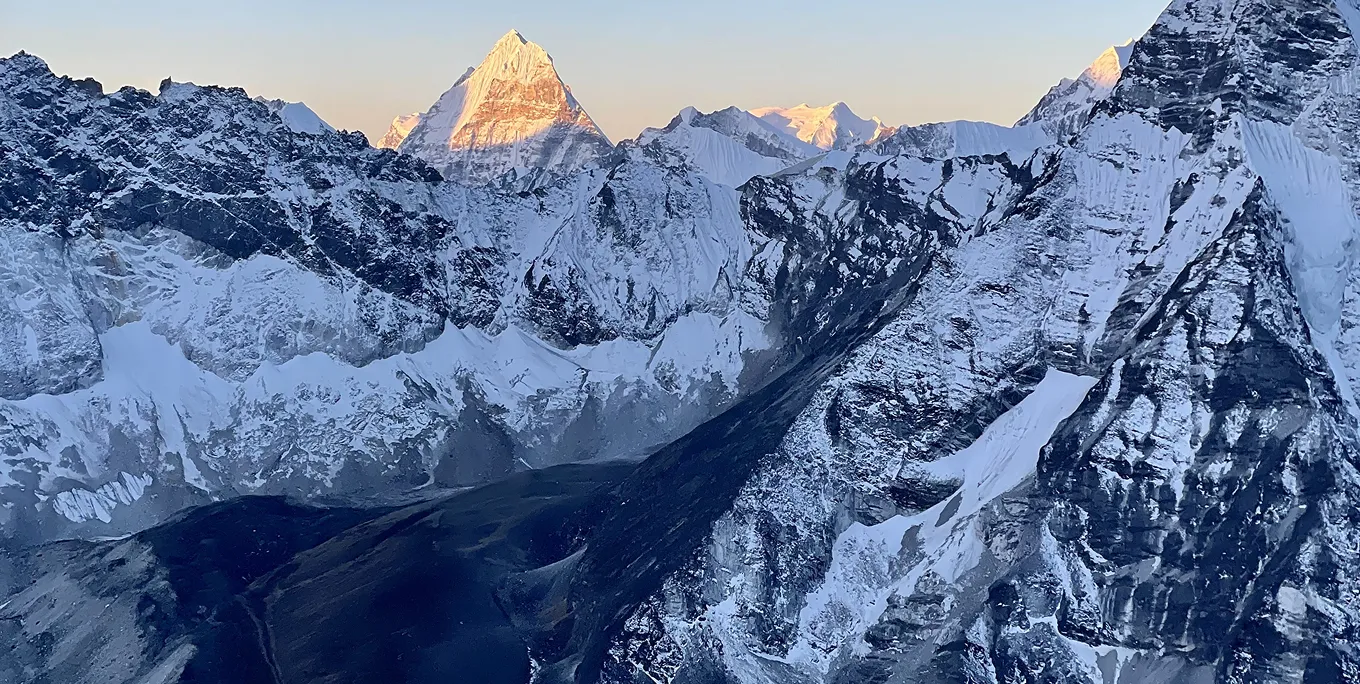
The summit rewards you with breathtaking views. You will stand face-to-face with Lhotse (8,516m). The panorama includes Makalu and Ama Dablam. You will stay in comfortable local teahouses. Our team sets up serviced tent camps at Base Camp. Himal Trek Nepal manages all complex logistics. We handle NMA permits and group gear. Our elite, certified Climbing Sherpas guide your push. This maximizes your safety and success.
Day 1
Check in to the hotel. Rest for a while and later in the evening meet your guide, sort out last minute preparation for trek before departure.
Day 2
Take a thrilling 30-minute mountain flight to Tenzing-Hillary Airport in Lukla. After meeting your porters, begin trekking downhill through beautiful pine forests, past mani stones, and alongside the roaring Dudh Koshi River to the village of Phakding.
Day 3
Cross several high suspension bridges, including the famous Hillary Suspension Bridge. After entering the Sagarmatha National Park checkpoint at Monjo, face a grueling, steep uphill climb through pine forests to reach Namche Bazaar, the bustling Sherpa hub. Catch your very first glimpse of Mount Everest along this climb.
Day 4
"Hike high, sleep low." Take a steep morning acclimatization hike up to the Everest View Hotel (3,880m) for panoramic views of Everest, Lhotse, and Ama Dablam.
• Afternoon: Explore Namche’s bakeries, gear shops, and the local Sherpa Culture Museum before returning to Namche to sleep.
Day 5
The trail begins with a relatively flat, scenic walk winding around the mountainside. Then, descend sharply to Phunki Thenga for lunch by the river. From there, face a tough 2-hour zigzagging uphill climb through rhododendron forests to Tengboche, home to the largest Buddhist monastery in the Khumbu region.
Day 6
Descend through forests to Deboche, cross the Imja Khola river, and pass through Pangboche village, where the tree line completely disappears. The landscape shifts into an arid, alpine tundra. Push forward into the wind-swept fields of Dingboche, a village protected by stone walls to grow barley and potatoes.
Day 7
Hike up Nagarjun Hill (Nangkartshang Peak), reaching an elevation of around 4,800 to 5,100 meters. The steep climb rewards you with breathtaking, sheer vertical views of Ama Dablam, Island Peak, and Makalu (the world’s 5th highest mountain). Return to Dingboche for a restful afternoon.
Day 8
Trail gently upwards past Thukla (Dughla) for a quick break. Next is a steep, slow climb up the Thukla Pass, which opens up to the moving Sherpa Memorial, a collection of stone monuments dedicated to climbers who lost their lives on Everest. From here, walk alongside the terminal moraine of the Khumbu Glacier to the small outpost of Lobuche.
Day 9
A rocky, undulating 3-hour trek over glacial debris brings you to Gorak Shep, the highest sleeping stop. After a quick lunch and drop of heavy bags, push onward for 2 to 3 hours over rugged moraine to reach the legendary Everest Base Camp. Celebrate your achievement at the iconic boulder covered in prayer flags, take photos, and return to Gorak Shep before dark to sleep.
(Note: You cannot actually see the summit of Everest from Base Camp itself, as it is blocked by Nuptse).
Day 10
Wake up at 4:00 AM in freezing temperatures for a brutal 2-hour uphill scramble to the top of Kala Patthar. This is the highest point of the trek, offering the ultimate, unobstructed sunrise view over Mount Everest, the Khumbu Icefall, and surrounding giants. Descend back down through Lobuche and turn into the Imja Valley toward Chhukung.
Day 11
Walk along the moraine of the Lhotse Glacier and beneath the massive south face of Lhotse. Set up your first night sleeping in tents at Island Peak Base Camp.
Day 12
Spend the day resting and sorting through your technical climbing gears. Practice using your ascend-er (Jumar), harness, and ropes on a mock fixed-line setup with your Sherpa guide.
Day 13
Return to Chhukung (4,730m) Wake up around 1:00 AM to begin the dark, steep scramble up rock ridges to the crampon point.Cross the glaciated ice fields, scale the steep 45-degree headwall, and traverse the narrow ridge to the summit. Safely descend back down past Base Camp all the way to Chhukung to celebrate.
Day 14
A long but physically easier day as you retrace your steps backward. Pass back through Tengboche, descend to the river, climb briefly back up, and coast along the mountainside trail until you are back in the comfort, warm showers, and cafes of Namche Bazaar.
Day 15
Your final trekking day. Make the steep descent down to the Hillary Suspension Bridge and exit the National Park at Monjo. Continue following the Dudh Koshi river, facing a few final, surprising uphill climbs before arriving back in Lukla to celebrate with your team.
Day 16
Catch an early morning flight out of Lukla. Once back in Kathmandu, transfer to your hotel for rest, souvenir shopping, and a well-deserved celebratory dinner.
Day 17
Free day for self exploration.
Day 18
Final departure.


Didn’t find what you were looking for?
So why not plan your own trip. It takes only 2 minutes.
 17 Days
.svg) 6,119m/20,075ft
6,119m/20,075ft

