 Recommended by 99% of travelers
Recommended by 99% of travelers
Recommended by 99% of travelers
.png)
.png)

.png)
.png)
.png)
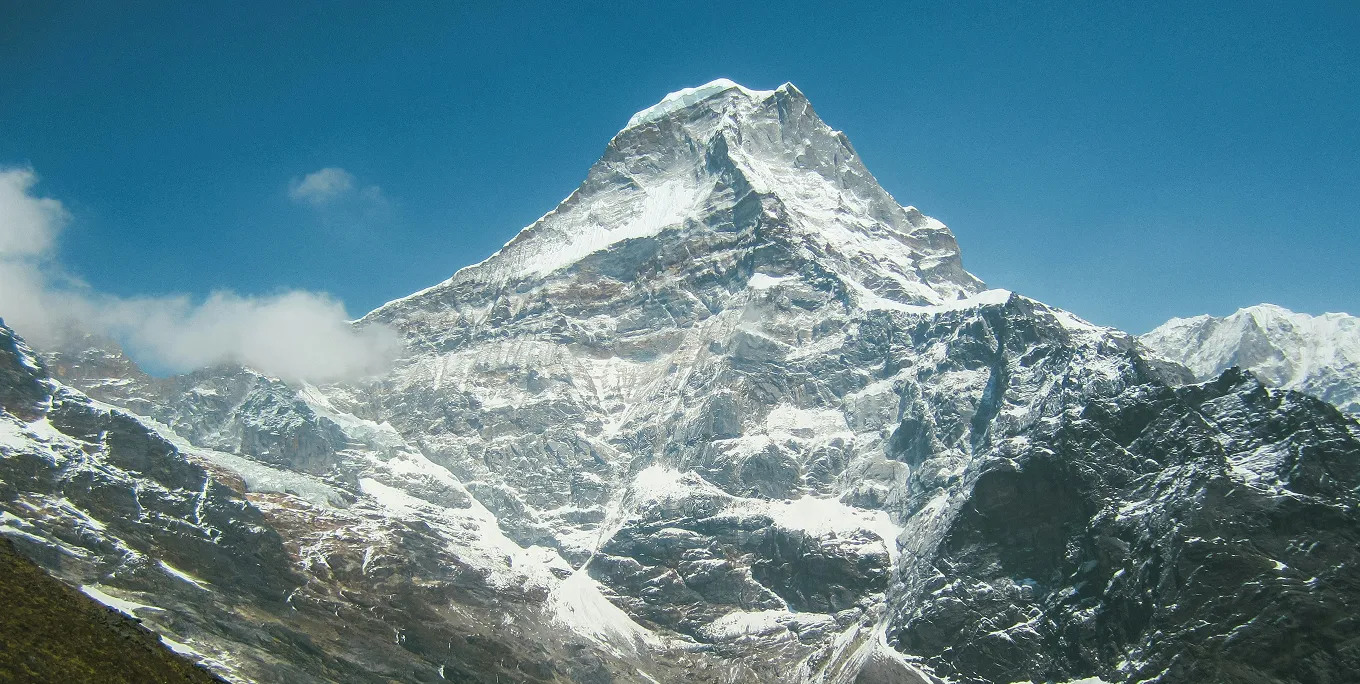
Mera Peak is the highest trekking peak in Nepal. It stands at a towering 6,476m (21,247ft). It lies in the Solu-Khumbu (Everest) Region. The Nepal Mountaineering Association (NMA) manages it legally. It is a famous non-technical summit. It is less vertical than Island Peak. This makes it a premier choice for trekkers. You can summit without advanced mountaineering skills. However, it requires immense physical stamina. The higher elevation and long glacier march demand strong cardiovascular endurance.
Day 1
Arrive at Tribhuvan International Airport. A Himal Trek Nepal representative will meet you at the terminal and transfer you to your hotel. After checking in, take time to rest. In the evening, meet your licensed trekking guide for your pre- departure briefing. Sort out gear, finalize last-minute preparations, and ask questions before departure.
Day 2
An exciting high-altitude flight to the Tenzing-Hillary Airport, followed by a descent through lush jungle terrain away from the busy Everest Base Camp crowds.
Day 3
Crossing the wooden bridge over the Handi Khola river and hiking past traditional terraced farming hamlets to reach a scenic Sherpa village.
Day 4
Conquering the first high mountain ridge pass of the journey, offering glimpses of the dramatic Hinku Valley.
Day 5
A rugged, undulating trail through dense bamboo and rhododendron forests within the pristine wilderness of the Hinku Valley.
Day 6
Joining the main Hinku River trail, walking beneath towering granite cliffs, and watching the valley open up into high alpine terrain.
Day 7
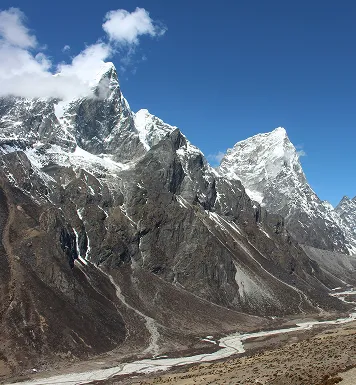
Following the shadows of Mera Peak alongside the riverbed, passing the historic 200-year-old Sabai Tsho glacial lake.
Day 8
Stepping over the 5,000-meter threshold into Khare, the main acclimatization and preparation hub for the climb.
Day 9
Learning essential rope skills, ice axe arrests, and crampon maneuvers on the nearby glacier with your expert climbing Sherpa.
Day 10
Navigating the steep Mera Glacier up to a dramatic, rocky perch at High Camp, revealing sweeping views of Everest, Lhotse, Makalu, and Cho Oyu.
Day 11
A 2:00 AM alpine start to push up the non-technical snow slopes. Stand atop the highest trekking peak in Nepal for a 360-degree view of five of the world's 8,000-meter giants before returning to Khare.
Day 12
A mandatory safety cushion day used only in case of bad summit weather or high winds on Day 11.
Day 13
A long, satisfying downhill trek back through the Hinku Valley, celebrating the successful summit with a thicker oxygen environment.
Day 14
Climbing back up out of the river valley to a high pasture settlement to prepare for the final pass crossing.
Day 15
Conquering the steep, rocky Zatrwa La Pass for one last looking-back view of the Hinku region before descending back to the comfort of a standard Lukla teahouse.
Day 16
A morning flight back to the capital. Transfer to your hotel for a hot shower and a celebratory farewell dinner with your agency team.
Day 17
Enjoy your final breakfast in Kathmandu. A Himal Trek Nepal representative will pick you up from your hotel and transfer you to Tribhuvan International Airport exactly three hours before your scheduled flight time, marking the conclusion of your journey.

The 13-to-18 days expedition offers an authentic wilderness experience. The route avoids the busy paths of Everest Base Camp. You will take a domestic flight to Lukla first. Your team then treks through remote Sherpa villages. You will pass pristine alpine forests and high valleys. The final staging point is Khare (5,000m). Our guides conduct vital pre-climb training there. The summit push involves a long glacier walk. Climbers will use crampons, ice axes, and safety ropes.
The summit rewards you with incredible views. You will witness five 8,000-meter peaks. The vista includes Mount Everest (8,848m), Lhotse, Makalu, Cho Oyu, and Kanchenjunga. You will stay in local teahouses during the trek. Our crew sets up a high camp at 5,700m. Himal Trek Nepal manages your entire expedition safely. We secure your mandatory NMA climbing permits. We provide group mountaineering gear and cold-resistant equipment. Our elite, certified Climbing Sherpas guide your journey to maximize success.
Safety & High-Altitude Medical Protocols
Client safety is our absolute priority. Our Mera Peak operations are backed by strict medical and emergency protocols to handle extreme altitudes responsibly.
Gradual Acclimatization Profile
Our 17-day itinerary features a slow, deliberate ascent through the Hinku Valley, avoiding rapid altitude jumps. We include a mandatory dedicated rest and preparation day at Khare (5,045m) before heading up to the glacier to ensure your body adapts smoothly to the thinning air.
Pre-Climb Skills Training
Before leaving Khare, our expert climbing Sherpas conduct a mandatory training session. You will practice walking on real ice with crampons, utilizing a rope team, managing your harness, and learning emergency ice axe arrest techniques until you feel completely confident.
Satellite Communications & Emergency Oxygen
Our expedition group guides carry satellite communication devices or high-frequency radios to maintain constant contact with our Kathmandu base office where cell service fails. We also carry emergency supplemental oxygen cylinders and comprehensive trauma first-aid kits at High Camp.
Professional Helicopter Evacuation Protocol
In the event of severe Acute Mountain Sickness (AMS), frostbite, or injury, we trigger an immediate medical evacuation. We partner with elite high-altitude helicopter rescue operators in Nepal capable of executing emergency casualty airlifts straight from Khare or the lower camps back to Kathmandu hospitals.
Safety & High-Altitude Medical Protocols
Client safety is our absolute priority. Our Mera Peak operations are backed by strict medical and emergency protocols to handle extreme altitudes responsibly.
Gradual Acclimatization Profile
Our 17-day itinerary features a slow, deliberate ascent through the Hinku Valley, avoiding rapid altitude jumps. We include a mandatory dedicated rest and preparation day at Khare (5,045m) before heading up to the glacier to ensure your body adapts smoothly to the thinning air.
Pre-Climb Skills Training
Before leaving Khare, our expert climbing Sherpas conduct a mandatory training session. You will practice walking on real ice with crampons, utilizing a rope team, managing your harness, and learning emergency ice axe arrest techniques until you feel completely confident.
Satellite Communications & Emergency Oxygen
Our expedition group guides carry satellite communication devices or high-frequency radios to maintain constant contact with our Kathmandu base office where cell service fails. We also carry emergency supplemental oxygen cylinders and comprehensive trauma first-aid kits at High Camp.
Professional Helicopter Evacuation Protocol
In the event of severe Acute Mountain Sickness (AMS), frostbite, or injury, we trigger an immediate medical evacuation. We partner with elite high-altitude helicopter rescue operators in Nepal capable of executing emergency casualty airlifts straight from Khare or the lower camps back to Kathmandu hospitals.

Didn’t find what you were looking for?
So why not plan your own trip. It takes only 2 minutes.
 17 Days
.svg) 6,119m/20,075ft
6,119m/20,075ft

